
NewarBrian
@NewarBrian
Senior Manager, Marketing @bcw_llc. Building @getsweptup. Former @cointelegraph. Force wielder. https://t.co/s8EuIwTO4O
Tip Earned
$1.03
Highlights
You posted
Web3 AI Might Die Without Conformity
Projects within the Web3 AI sector could remain niche unless they adapt to global principles espoused by national governments and transnational corporations.Originally published at: https://sweptpod.com/web3-ai-might-die-without-conformity/As the rapid evolution of artificial intelligence (AI) unfolds, two distinct ecosystems are charting their own courses: traditional tech giants and governments on one hand, and Web3-native AI projects on the other. While both share a vision of an AI-augmented future, their values and guiding principles are increasingly at odds, which raises serious concerns about the longevity of Web3-based AI applications.Bitcoin is currently the only example of a crypto or Web3-based global solution to transcend into the zeitgeist without compromising its core principles.https://x.com/getsweptup/status/1952712442162901135However, stablecoins and decentralized finance, those Web3 technologies currently vaulting into common financial dashboards of the developed and developing world alike, have made tremendous compromises to achieve their success.Web3 AI solutions will need to make similar compromises to find their success, as well.Centralized AI: Safety, Equity, and GovernanceGovernments and major technology firms like Microsoft are aggressively formalizing frameworks for “responsible AI.”Microsoft, for example, has published internal standards aimed at preventing AI from reinforcing societal inequities. Likewise, the OECD’s AI policy dashboard prioritizes human rights, fairness, and safety.These initiatives suggest that compliance, transparency, and harm mitigation are seen as essential pillars of long-term AI deployment, and should be prioritized by tech firms seeking mass adoption of their solutions. AI systems must not only deliver results but also align with regulatory expectations and ethical norms.Web3 AI: Incentives, Openness, and DecentralizationIn contrast, Web3 AI projects like BitTensor, Sahara AI, Near, and Story Protocol focus more on decentralization, open participation, and tokenized incentives.Equity, as defined by traditional institutions, is rarely mentioned in these projects’ documentation. Instead, they lean on permissionless access and market-driven models to foster what they view as a more “neutral” form of inclusion.BitTensor, for instance, does not explicitly account for social inequalities or user safety. Its emphasis is on providing rewards to anyone who contributes compute or intelligence without any centralized oversight.Similarly, Near champions decentralized infrastructure and permissionless access, focusing on the technical and economic layers rather than social governance.Story Protocol adds another layer of experimentation, with a universal IP repository and the inclusion of AI agents as validators, suggesting a future where content and governance could be shaped by autonomous systems.A Fractured Future or Converging Paths?The tension between these two frameworks centralized responsible AI versus decentralized incentivized AI presents a challenge for interoperability and scalability.If Web3 projects want to be more than experimental sandboxes, they will likely need to align with evolving global standards. Regulatory pressure and public trust demands are already reshaping how AI systems are built and deployed across borders.The hypothesis emerging from current comparisons is clear: mass adoption of Web3 AI may require a shift toward shared norms around safety, accountability, and compliance. Otherwise, these projects risk racing merely to the periphery of innovation, but ultimately incompatible with the systems the majority will use.This study will explore in much greater detail the guidelines and frameworks which global players are suggesting for AI tech, and the principles-in-action which Web3 AI projects are being powered by on a human level. The goal here will be to demonstrate how the globally adopted Web3 solutions (stablecoins, DeFi) excepting Bitcoin have needed to compromise meaningfully with incumbents to find success – and why Web-3 based AI solutions will be no different.
Read moreYou posted

Sogni & Prodia: Which GenAI Image Generator Leads the Pack?
As generative artificial intelligence (GenAI) continues to transform creative landscapes, a new wave of decentralized image generation tools is challenging legacy platforms.Originally published at: https://sweptpod.com/sogni-prodia-which-genai-image-generator-leads-the-pack/In a head-to-head comparison, Web3-based Sogni emerged as the superior option over Prodia, showcasing marked improvements in image coherence, prompt accuracy, and output versatility.The Rise of Web3-Powered GenAI PlatformsThe past year has seen rapid progress in the field of AI-generated art, with tools like Midjourney, DALL·E 3, and Stable Diffusion XL (SDXL) setting new benchmarks in fidelity and control.As these platforms rise in prominence, their contribution to the projected $2T+ market size of AI technology before the end of the decade will become more outsized.However, these platforms often operate behind paywalls, restrict API access, or lack true decentralization. That gap has paved the way for open GenAI projects that align with Web3 values like transparency, composability, and user ownership to rise to the top.Both Prodia and Sogni fall into this category.Prodia launched earlier in 2024 as a REST API-based image generation platform that allows developers to call models like SDXL, Playground v2, and DreamShaper with a simple integration. Sogni, on the other hand, went to mainnet in June and is rapidly evolving with an emphasis on onchain functionality, user-owned compute, and fine-tuned control over outputs.Sogni Outperforms in Key CategoriesIn a direct test using the same prompt and the Flux Schnell v1 model, Sogni delivered sharper, more accurate results across multiple generations.Sogni also generated outputs faster on a subjective basis. A caveat to this measure was that outputs from Prodia were impeded by a persistent verification request from Cloudflare. Without the verification request, Prodia would likely have been faster, but would have generated only one image to Sogni’s 4-at-a-time.While Prodia’s outputs were competent, they lacked consistency and often introduced hallucinations such as a floating mic stand. In contrast, Sogni’s outputs demonstrated better composition, more logical backgrounds, and a clearer interpretation of prompt details.As of now, Sogni supports several image models and plans to release more fine-tuned models in the near future.Why This Matters for AIUser experience (UX) is a major bottleneck among Web3 projects as they require users to login with relatively niche wallet technology. Although Web3 wallet logins can be more secure and faster than more traditional methods, they are clunky due to the confederation of wallet technology for the layperson.Both Prodia and Sogni overcome the common Web3 login bottleneck. Prodia required no login at all. It was usable from the app straightaway, whereas Sogni required only an email, and privacy-focused email domains are accepted.Furthermore, as these platforms gain traction, their demand for compute will rise in proportion. Larger conglomerates have the resources handy to build their own data centers and make deals with power plants, but small, decentralized projects do not.Sogni’s model attempts to overcome the challenge of compute supply by outsourcing compute generation to the broader Web3 community – users can contribute GPU power to the platform.The broader GenAI space is shifting quickly. With projects like Scenario.gg enabling fine-tuned 3D asset generation, and Leonardo.Ai focusing on production pipelines for game assets, the competition is heating up.As the demand for AI-generated media grows, platforms that offer superior output, accessible infrastructure, and user ownership may define the next era of GenAI.
Read moreYou posted
Autonomous Economic AI Agents: A New Frontier for Crypto Trading
A growing wave of innovation is reshaping the Web3 landscape with the integration of AI-powered autonomous economic agents, particularly in onchain trading.Originally Published at https://sweptpod.com/the-rise-of-autonomous-economic-ai-agents-in-web3-a-new-frontier-for-crypto-trading/Autonomous Economic ActivityAs blockchain ecosystems become faster and more modular, teams are exploring the use of AI agents to coordinate and execute complex actions across decentralized systems, such as trading crypto via autonomous economic action (AEA).https://www.youtube.com/watch?v=jTr4lbmCiwsAEA refers to the use of AI-powered autonomous economic agents to front-run, execute, and rebalance onchain positions with speed and precision no human can match. After all, when trading onchain, milliseconds can determine profit or loss.A newcomer to this shift is Coral Protocol, a new Web3 infrastructure standard designed to enable AI agents to coordinate, communicate, and complete economic tasks securely and transparently. Coral positions itself as a framework-neutral protocol, meaning agents built with varying frameworks from CrewAI to Eliza to Langchain can collaborate through its standardized interface.However, trading bots are not autonomous The next evolution could involve agents, that perform AEA, equipped with reinforcement learning models that adjust strategies dynamically in response to real-time data.What Do You Trust?Yet even as the technology matures, user trust remains a major barrier.Most developers and crypto founders remain hesitant to let an AI agent control even a small portion of their wallets. Concerns about hallucinations, misaligned incentives, or rogue decision-making still haunt the industry.Nonetheless, interest is rising as systems like Coral promise improved governance, modularity, and transparency, and an element of reliability may be imparted by the likes of Recall Network. Recall presents competitions for AI agents based on their specializations to perform particular tasks. The winning teams collect prizes and gain trust from the community that their agents are worth more than just the lines of code.https://www.youtube.com/watch?v=a8rCaZQL0n8Expanding AI Agent EconomiesThe trend toward AI-agent economies is gaining traction. Protocols like Autonolas, Fetch.ai, and Aita are exploring similar ground, while projects such as UniswapX and ChainML test AI integrations at the app layer.Venture capital is responding in kind as over $1.4 billion has been raised this year alone for AI-agent-based Web3 platforms, according to DappRadar.The concept of the “Internet of Agents” is still largely theoretical, but its building blocks are falling into place. Whether these agents manage portfolios, automate DAO tasks, or trade NFTs, one thing is certain: the fusion of AI autonomy and Web3 programmability is accelerating, and investors, developers, and regulators alike should be paying close attention.
Read moreYou posted
AI Agents May Fuel a Trillion-Dollar Market by 2028
A recent report by Morgan Stanley outlined how the agentic AI space could drive a nearly trillion-dollar market before the decade is up.The report, titled “AI Agents Knocking at the Door,” outlines how these intelligent agents are poised to revolutionize enterprise software and digital workflows by replacing human decision-making in increasingly complex processes.Story originally published on sweptpod.comFrom Theory to Market TractionAI agents are more than just chatbots. As defined by Morgan Stanley, they are autonomous software entities capable of planning, adapting, and executing multi-step tasks using tools, memory, and real-time data.Unlike static AI models, these agents are designed to operate across workflows and systems, gradually transforming how businesses handle operations, customer service, and decision-making.Conservatively, the market currently sits at around $6 billion (in narrow AI automation terms) and could grow to $20 billion by 2028. However, in a broader framework that includes system-wide automation and SaaS integration, the opportunity swells to $102 billion. And in the most expansive view, which covers the entire software application layer, Morgan Stanley sees a path toward a trillion-dollar valuation.Winners: Cloud Giants and AI BuildersUnsurprisingly, the hyperscalers—Microsoft, Amazon AWS, and Google Cloud—are projected to capture the lion’s share of value due to their dominance in compute infrastructure. Model builders like OpenAI and Anthropic also stand to benefit heavily, especially as they roll out agent-centric SDKs and platforms.Other likely winners include companies in:Workflow automation (e.g., ServiceNow, Atlassian)Data infrastructure (e.g., Snowflake, Palantir)Security and governance (e.g., Okta, Cloudflare, CyberArk)Pricing Models Still in FluxMorgan Stanley highlighted a wide variance in pricing strategies, ranging from per-agent subscriptions and token-based usage (OpenAI, Anthropic), to outcome-based pricing (Zendesk, Sierra), and hybrid models (Salesforce’s Agentforce).Pricing will become a defining factor for adoption, especially as enterprise budgets weigh ROI against compute cost.Outlook: A Web3 Opportunity?Although the report centers on enterprise AI, Web3 builders should pay close attention. Platforms like Virtuals and on-chain compute providers could benefit as decentralized agentic systems scale—particularly if cloud-based agents become tokenized and traded on open marketplaces.In short, the agentic era is arriving fast, and it’s bringing both massive opportunity and fierce competition.
Read moreYou posted
Investments Flowing Into “Autonomous Onchain Agents"
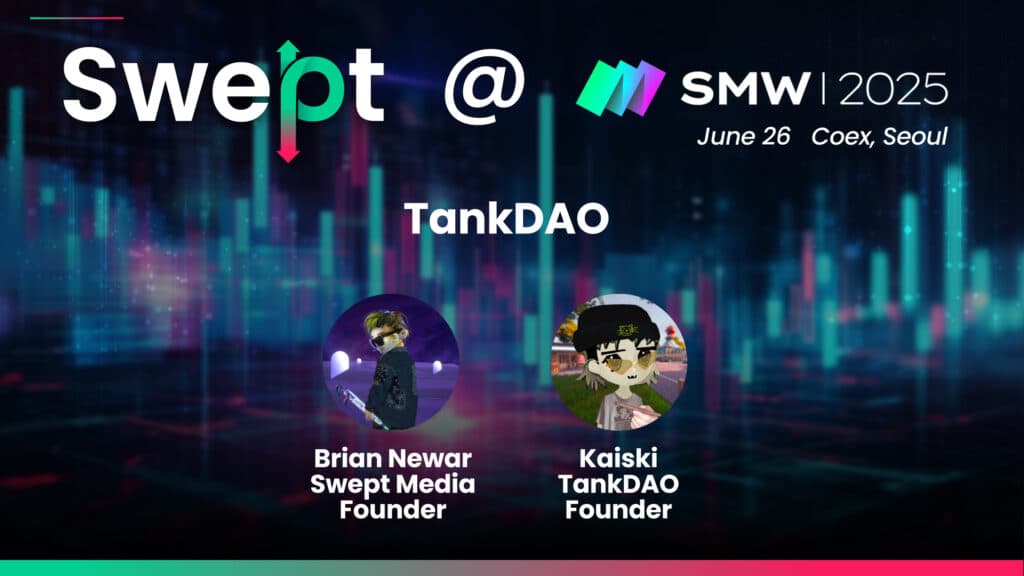
The rise of AI trading agents as a main primitive among crypto traders is an inevitability according to Kaiski, co-founder of TankDAO. Kai, who leads an accelerator focused on end-to-end support for emerging Web3 projects across Asia, explained on June 30 that he sees “autonomous onchain agents” as the hottest use case for AI in the space. These are bots or AI agents that can autonomously manage liquidity, mirror trades of onchain whales, or optimize yield strategies. “Imagine having a bot that tracks a top wallet and copy trades in real time across chains like Solana and Hyperliquid,” Kai explained. “Or a tool that adjusts Uniswap V3 positions automatically based on volatility. These aren’t future ideas. They’re already starting to roll out.” Article originally found here: https://sweptpod.com/investments-flowing-into-autonomous-onchain-agents-interview/ Benefits for Users He emphasized that these solutions solve real pain points for users and founders alike. While most users lack the time or skills to constantly manage positions across chains, AI agents can act as co-pilots that allow humans to delegate decision making, reduce errors, and improve outcomes. For builders, these agents can filter real users from airdrop farmers, identify wallet behaviors, and boost acquisition efficiency. Kai noted that Tank is doubling down on teams building these agent layers. “Not just bots that execute,” he said, “but ones that understand wallet behavior and take meaningful action.” When asked if he uses such tools himself, Kai confirmed that both his DAO, TankDAO, and his day-to-day operations rely heavily on AI, but did not mention specifically AI trading bots. He uses AI for summarizing governance proposals, detecting voter collusion, generating quest systems, and even building interactive NPCs based on NFT holdings. “AI isn’t just a productivity boost anymore—it’s a core layer in Web3." As the Web3 landscape matures, expect AI agents to become embedded in everything from DeFi to governance. For Kai and TankDAO, the future of crypto is automated, intelligent, and user-first. Security Concerns Swept Media has covered the security concerns surrounding AI crypto trading agents before, and noted that agent reliability is the biggest bottleneck on the way towards broader utilization of these tools. AI agent verification platforms are already working to tackle this and other issues in the sector.
Read more